Nouns are very popular. Everyone wants to be a person, place or thing.
funny
179 puns · Last updated 2026-10-25
Printable, free for personal and classroom use. Includes every pun, the FAQ and a link back to this page.
Grammar is easier to remember when it makes you laugh. This page is a full course in grammar humor, with 175+ clean grammar jokes for students arranged as lessons. Start with nouns and verbs, move through the eight parts of speech, then visit the punctuation lab, the homophone hall and the tense trouble unit. A pop quiz closes the course.

A noun names a person, place, thing or idea. Nouns are the first stop in any grammar course, and the easiest to tease.
Nouns are very popular. Everyone wants to be a person, place or thing.
Why did the noun go to therapy? It had an identity crisis between common and proper.
A proper noun always wears a capital letter, like a tiny top hat.
My little brother thinks "homework" is a four-letter noun.
What did the common noun say to the proper noun? "You think you're so capital."
I asked the class for an abstract noun. Someone said "sleep." Very abstract for teenagers.
Collective nouns prove that a group of owls is a parliament and a group of students is a queue for lunch.
Why was the noun always calm? It knew it could always count on a determiner.
Every noun has a name tag. Some just shout it in capitals.
Plural nouns are just singular nouns that brought friends.
Uncountable nouns like "advice" are why teachers give so much of it.
Pronouns stand in for nouns, like he, she, it, they, I and we. They save time and cause confusion in equal measure.
Pronouns are nouns that sent a substitute.
Why are pronouns so friendly? They're always there for you.
"It" is the most mysterious pronoun. Nobody knows what it is until the sentence ends.
My essay used "they" so many times my teacher asked who "they" were and if they had paid tuition.
What did "I" say to "me"? "Stop objecting to everything."
The pronoun "who" and the pronoun "whom" went to a party. Only one got invited, and nobody remembers which.
A reflexive pronoun is a word that looks in the mirror. Himself. Herself. Yourself.
We is the warmest pronoun. It means you are not alone.
Why did the pronoun get lost? It forgot its antecedent at home.
"Someone ate my lunch." Indefinite pronoun, definite crime.
Verbs are action and being words. Run, think, be, have. Without verbs, nothing in a sentence happens.
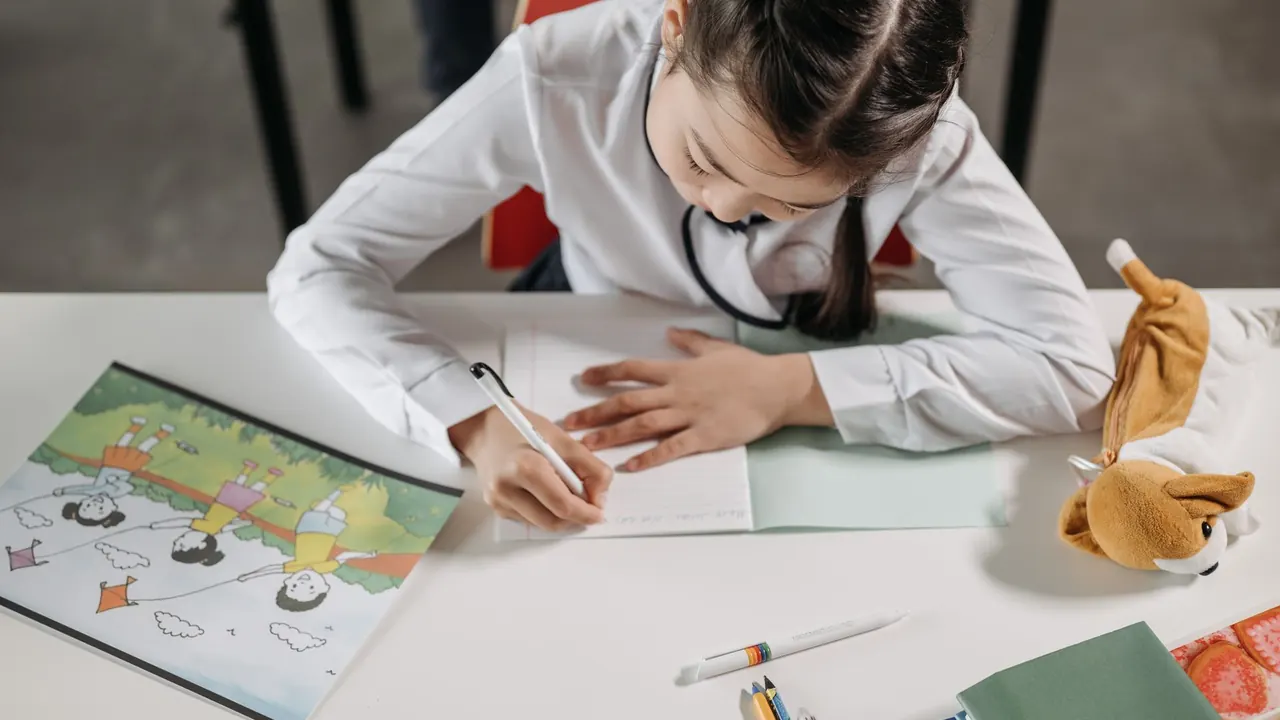
Verbs are the busiest words in English. They never stop doing things.
Why did the verb go to the gym? To work on its action.
"To be" is the laziest verb. It just exists.
My favourite verb on Saturday is "rest." My mum's favourite is "tidy."
What did the verb say to the noun? "Let's get moving."
Irregular verbs are like cats. They do whatever they want, then expect you to remember it.
Helping verbs are the best friends of grammar. Can, will and should always lend a hand.
Why are verbs never bored? There's always some action.
A sentence without a verb is a car without wheels.
I asked my class for a linking verb. Someone said "Wi-Fi." Close enough.
"Go" turns into "went" in the past. Nobody knows why. Even the verb is embarrassed.
Adjectives describe nouns. They tell us which, what kind and how many. They're the decorators of grammar.
Adjectives are nouns' personal stylists.
Why did the adjective get a job in fashion? It loved describing things.
Superlatives are adjectives with big egos. Best, biggest, greatest.
My essay had so many adjectives my teacher said it was "very, very, very descriptive."
What did the adjective say on its date? "You look absolutely noun-believable."
Comparative adjectives are always measuring themselves against others. Taller. Faster. Funnier.
Adjective order is a secret rule everyone follows but nobody can explain. A big red old car sounds wrong. A big old red car sounds right.
Adjectives make "dog" into "fluffy, happy, muddy dog." That's a big upgrade.
Why did the adjective stand next to the noun? It wanted to make a good impression.
Teachers say avoid "nice." Nice try, teachers.
Adverbs describe verbs, adjectives or other adverbs. Many end in -ly, like quickly and quietly, but not all do.
Adverbs are verbs with a sidekick.
Why did the adverb get a speeding ticket? It was going too quickly.
Not all adverbs end in -ly. "Very" is an adverb, and it's very proud of that.
I finished my homework quickly, badly and suspiciously early.
What's an adverb's favourite sport? Running quickly, obviously.
My teacher crossed out half my adverbs. I took it really, extremely, totally well.
An adverb can change a whole sentence. "She sang" is fine. "She sang loudly at 6 a.m." is a family crisis.
Softly, gently, sleepily. Adverbs can sound like a lullaby.
Why did the adverb get promoted? It always did its job well.
"Literally" is an adverb that has given up on meaning literally.
Prepositions show where or when something is: in, on, under, before, after, between. They're tiny words with a big job.
Prepositions are the GPS of grammar. In, on, under, next to and turn left at the comma.
Why did the preposition join the army? It was used to taking positions.
A cat can be on the mat, under the mat or in a box beside the mat. Cats know all the prepositions.
My little sister learned "under." Now everything is under the sofa, including my phone.
What did the preposition say to its friend? "I'm here between you and me."
Ending a sentence with a preposition is something some people still argue about.
My room is a preposition lesson. Socks on the floor, books under the bed, me in trouble.
Over the rainbow is the prettiest preposition phrase there is.
Why are prepositions great at parties? They always know where to stand.
Conjunctions join words and clauses. The FANBOYS list helps: for, and, nor, but, or, yet, so.
Conjunctions are the glue of grammar. And, but, so, please stop running on.
Why did the conjunction become a matchmaker? It loved bringing words together.
"But" is the most dramatic conjunction. Everything before it is about to be ignored.
My essay was one sentence long. It just had 47 "ands."
What's a conjunction's favourite band? FANBOYS, obviously.
"Or" is a conjunction that gives you options. "Nor" is one that takes them away.
I asked my class to use "yet" as a conjunction. They said they hadn't finished yet.
"And" is the friendliest word. It always makes room for one more.
Why was "so" so confident? It always got results.
Mum says I can have dessert if I finish my vegetables. That "if" is doing a lot of work.
Interjections are short bursts of feeling: wow, oops, hey, ouch. They often come with an exclamation mark.
Interjections are words that can't wait their turn. Wow!
Why do interjections make great cheerleaders? Hooray, they're always excited!
"Oops" is an interjection and a full apology in one word.
My dad's favourite interjection is "Hmm." It means yes, no and maybe, depending on the day.
What did the interjection say on the roller coaster? Wheee!
Yay is the smallest happy word in English.
My essay had no interjections. My teacher's comments had several.
Interjections don't follow the rules of the sentence. Ah, freedom.
Why did the interjection get detention? It kept interrupting.
Commas organise lists and clauses and prevent confusion. The Oxford comma, the one before the last item in a list, has fans on both sides.
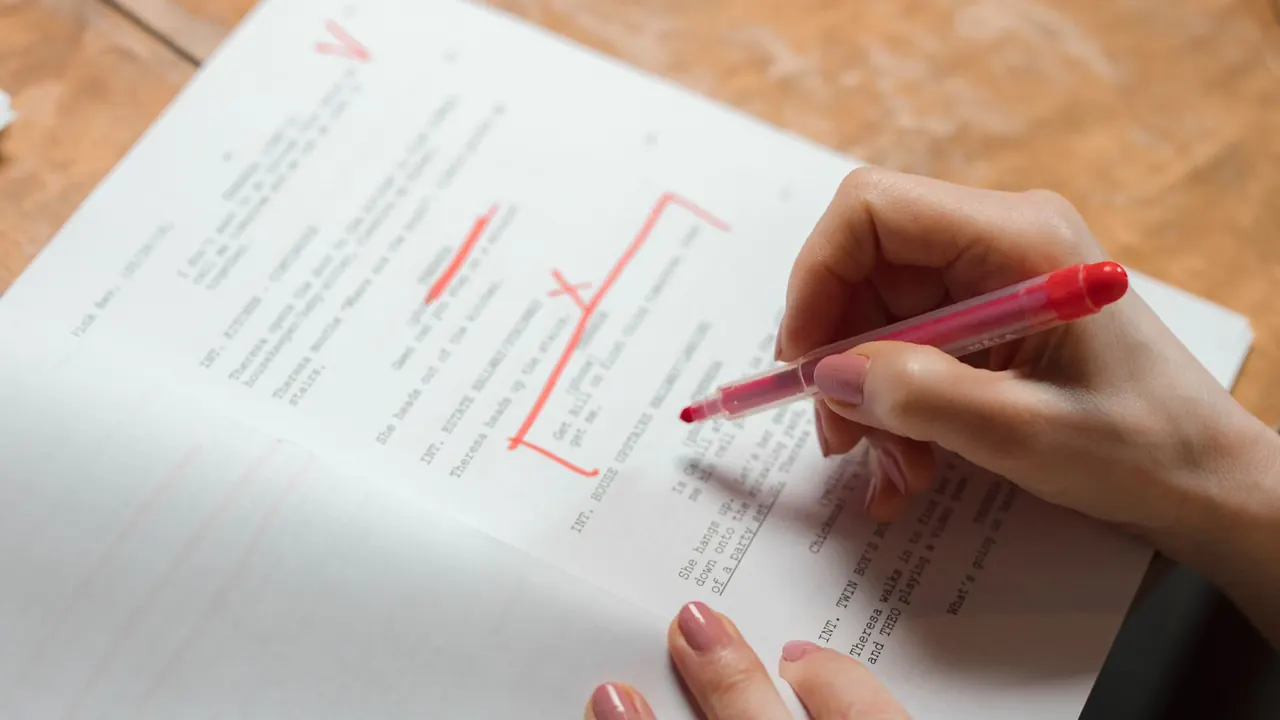
Commas are the speed bumps of writing. Slow down, then keep going.
Why did the comma break up with the full stop? It wanted to keep things going.
Without the Oxford comma, I'd like to thank my parents, a pirate and a sandwich. With it, I thank four separate friends.
I put so many commas in my essay my teacher thought it was a list.
What did the comma say to the clause? "Take a little pause with me."
My teacher said I use commas like confetti. I said it's a celebration.
"I love cooking my family and my pets" is the reason cooks need commas.
A comma is a tiny breath on the page.
Why are Oxford comma fans so loyal? They never leave anyone out.
My comma splice was so bad the sentence filed for divorce.
I asked my class where the comma goes. A student pointed at the ceiling.
Apostrophes show ownership or missing letters. Semicolons link close ideas. Full stops, called periods in American English, end the show.
An apostrophe is a comma that went up in the world.
The apostrophe in "it's" means "it is." The one in my brother's essay means "I guessed."
Why did the semicolon go to college? It wanted to join two independent clauses; it was ambitious.
I tried to use a semicolon once. I'm still not sure it worked; my teacher isn't either.
What did the full stop say to the sentence? "That's the end of that."
A semicolon is a full stop that couldn't decide.
Exclamation marks are for emergencies! Not for every sentence! My texts disagree!
Why did the apostrophe feel left out? Everyone kept missing it.
A full stop is a tiny dot that means you did it.
Shop signs selling "apple's" and "banana's" keep apostrophes very busy.
Question marks are curious. They always end with a hook.
Homophones sound the same but have different meanings and spellings. They make English spelling tests a minefield, and pun writing a playground.

Their going to be so confused. There. They're. Their. I'm fine.
Why did "too" feel crowded? "To" and "two" kept tagging along.
Homophones are words that sound alike but don't get along.
My spell checker knows I meant "they're." It just doesn't care.
What did "your" say to "you're"? "You're always taking my place."
I wrote "I'm hoarse" in my essay. My teacher drew a horse.
Homophones prove words can be twins and still be totally different.
Why did the bear go to grammar class? It wanted to know how to bare its feelings correctly.
"Weather" and "whether" are the reason I bring an umbrella to English class.
"Principle" and "principal" are the two words that send students to the head's office.
"Its" or "it's"? I flip a coin. The coin is always wrong.
Tenses show when something happens. Past tense for yesterday, present for now and future for tomorrow's homework.
My verb tenses had an argument in my essay. Things got past, present and very tense.
Why did the verb go back in time? It wanted to be in the past tense.
The future tense is the only place my homework is always finished.
I will have been finishing my essay. Future perfect progressive, not much progress.
What did the present tense say to the past tense? "Get over yourself."
My teacher asked what tense "I am late" is. I said, "Very."
Past perfect is the tense for regrets. "I had studied." Sadly, I had not.
The present tense is where good friends always live: right here, right now.
My little brother uses the past tense of "goed." The family agrees it should be a word.
Why do tenses make good friends? They're always there at the right time.
A complete sentence needs a subject and a verb. A fragment is missing something, and a run-on keeps going without proper punctuation.
My sentence fragment asked for help. Because. That was all it said.
Why did the run-on sentence get tired? It never took a breath.
A sentence fragment is like a sandwich with no bread. Interesting. But messy.
My essay was one long run-on sentence and my teacher ran out of red ink and patience and lunch break and.
What do you call a sentence with no subject? Pretty pointless.
Subject and verb agreement means they both have to like each other. Like a group project.
Short sentences hit hard. Long sentences, with their commas and clauses, take you on a journey.
A complete sentence is a tiny story with a beginning and an end.
Why did the subject break up with the predicate? It felt incomplete.
My teacher said my essay had too many fragments. Like this one. And this.
Capital letters start sentences and names. Spelling turns sounds into letters, which in English is an adventure.
Capital letters are the VIPs of the sentence. They always go first.
Why did the capital letter get a promotion? It was always on top.
English spelling is where "through," "though" and "tough" all live on the same street and never agree.
I spelled "necessary" right on the first try. Then I woke up.
Why did the spelling bee get a gold medal? It was buzzing with the right letters.
Spell check is my best friend and my worst enemy, often in the same sentence.
The silent "k" in "knife" is the ninja of the alphabet.
Every name deserves a capital letter. That's grammar being polite.
What did the vowel say to the consonant? "Stop being so bossy, you need me."
Writing in all capitals is like shouting in a library. EVERYONE NOTICES.
A strong vocabulary helps every subject. Dictionaries and thesauruses are a writer's toolbox.
I asked my thesaurus for a word meaning "tired." It gave me 30, and now I'm exhausted, weary and drained.
Why was the dictionary so smart? It knew all the definitions.
A thesaurus is the only book that can say the same thing in ten different ways and still be helpful.
My vocabulary grew so much this year that my mum needs a dictionary to argue with me.
What did the new word say to the dictionary? "I'd love to be in your next edition."
I learned "procrastinate" this week. I'll use it next week.
Every new word is a tiny key that opens a new idea.
Synonyms are words that agree. Antonyms are words that argue.
Why did the word "big" go to school? It wanted to become enormous.
"Onomatopoeia" is a fun word to say and a hard word to spell. Boom.
Simple jokes for primary school and early learners who are just meeting nouns, verbs and capital letters.

Why did the capital letter feel important? It always started things.
What is a noun's favourite game? Name that thing.
Why did the full stop go to bed early? It was the end of the day.
What do verbs do at recess? They run, jump and play.
Why was the alphabet so happy? It had 26 friends.
What did the question mark ask the teacher? "Why?"
Why did the letter A go to the doctor? It felt a bit vowel.
What do adjectives eat for lunch? Descriptive sandwiches.
Why did the sentence smile? It finally got its full stop.
What do you call a lost question mark? A little puzzled.
Why did the exclamation mark love parties? It was always excited!
Why does Q hold hands with U in most words? It gets shy on its own.
What is a pencil's favourite part of grammar? Writing a full sentence, point first.
The course ends with a pop quiz. No marks, just groans. For more school laughs, our teacher appreciation jokes make a lovely end-of-term card.
Pop quiz: name a collective noun for grammar teachers. Answer: a correction.
Grammar is the difference between knowing your stuff and knowing you're stuff.
I'm not a grammar teacher. I just correct everyone silently in my head.
Why did the student marry the dictionary? It had all the right words.
My grammar is perfect. My spelling is still on its way.
Grammar rules are like traffic rules. Everyone breaks them, and everyone notices.
What's a grammar teacher's favourite candy? Syntax-ty bars.
I tried to write a perfect sentence. Then I added a semicolon; that was a mistake.
Grammar helps your words hold hands.
Good grammar costs nothing. Bad grammar costs marks.
Grammar humor is the only kind where the punchline needs proofreading.
My autocorrect has worse grammar than my little brother, and he's four.
Thank you, grammar, for making our ideas clear.
Grammar jokes test understanding. To get a comma joke, you need to know what a comma does, so laughing is a sign of learning.
English is full of quirks: irregular verbs, homophones and words that switch roles. Quirks are perfect raw material for jokes.
Humor also lowers stress. A grammar lesson that starts with a laugh feels less like a test and more like a puzzle.
Choose one rule or term, such as tense, comma, homophone or adverb.
Find a double meaning. Tense means a verb form and a nervous feeling. Present means now and a gift. Pick the one with a picture you can see.
Build a short setup, then land the twist on the last word. Test it on a friend who knows the rule. If they groan, you've done it. Our writer puns show the same trick on drafts and deadlines.
Teachers can open each grammar unit with the matching lesson jokes. It helps students recall the topic at the start of class.
Students can add a joke to revision notes or flashcards. A funny example is easier to remember on exam day.
Use the pop quiz lines for newsletters, posters and end-of-term cards. Book lovers in the class may also enjoy our book puns.
We built each lesson around one grammar idea, then wrote jokes that only work if you understand that idea. A comma joke needs a comma, and a homophone joke needs two words that sound alike. Grammar terms follow standard school English, and facts like the Buffalo sentence were checked against linguistics sources. We avoided mocking people for mistakes, so the humor stays kind, which suits college and school life puns fans too.
Written and reviewed by the Home Notes Editorial Team. Every line is original, read aloud before publishing, and kept family friendly. Last reviewed .
Psychologist Rod Martin and colleagues described four humor styles: affiliative, which bonds people; self-enhancing, which helps you cope; aggressive, which teases others; and self-defeating, which puts yourself down. Grammar jokes for students work best as affiliative humor. They bring a class together without anyone being the target.
A famous one is "Buffalo buffalo Buffalo buffalo buffalo buffalo Buffalo buffalo." It uses buffalo as a city, an animal and a verb meaning to bully. Another favourite is "Time flies like an arrow; fruit flies like a banana," which shows how word classes can switch.
Use jokes, games and real examples. Start a lesson with a grammar joke, then ask students why it works. Comma jokes like "Let's eat, Grandma" show why punctuation matters. Students remember rules better when they laugh, and writing their own jokes turns them into active learners.
It is a popular saying, often linked online to Oscar Wilde, though the source is debated. Sarcasm can be clever, but in class it can hurt feelings when aimed at someone. That's why our grammar humor teases words and rules, not people. Gentle puns keep everyone laughing together.
The Buffalo sentence is a top pick. Another is "James while John had had had had had had had had had had had a better effect on the teacher," which needs punctuation to make sense. Both show how grammar rules can create odd but technically valid sentences.
Yes. Funnier is the standard comparative form of funny, and funniest is the superlative. You change the y to i and add -er or -est, just like happier and happiest. So you can say this page has funnier grammar jokes than your textbook, and be grammatically correct.
School appropriate jokes are clean, kind and easy to follow. Try "Why did the comma break up with the full stop? It wanted to keep things going." Every joke on this page fits classrooms. For more school-safe humor across subjects, browse our Sports, Hobby & School collection.
English jokes play on spelling, punctuation and parts of speech. Try "My verb tenses had an argument in my essay. Things got past, present and very tense." Or "An apostrophe is a comma that went up in the world." They help students remember terms while having fun.
Start with nouns, verbs and adjectives, then add capital letters, full stops and question marks. Next come plurals, pronouns and simple past tense. Our younger students section uses these early topics. Jokes are a good way to review each one before moving on to commas and apostrophes.
Yes. They are written for students, but teachers can use them as warm-ups, exit tickets or bulletin board ideas. Each section matches a common grammar unit, so you can pick jokes that fit the lesson. Our teacher puns page has more humor about life on the other side of the desk.
Teacher Puns and School Jokes for the Classroom, Staff Room and Group Chat: 466 Lines
160 Writer Puns: Funny, Clever and Clean One-Liners
400 Book Puns: Funny, Clever and Reader-Approved One-Liners
188 College & Writing Puns: Funny, Clever and Clean One-Liners
Teacher Appreciation Jokes (2026): 167 Lines That Say Thanks and Land
Joke Book for Teenagers (2026): 180+ Clean Jokes Plus a Funny Book Reading List
← Back to all Sports, Hobby & School Puns